Privacy Coins Compared — Monero, Zcash, Pirate Chain for Anonymous Payments
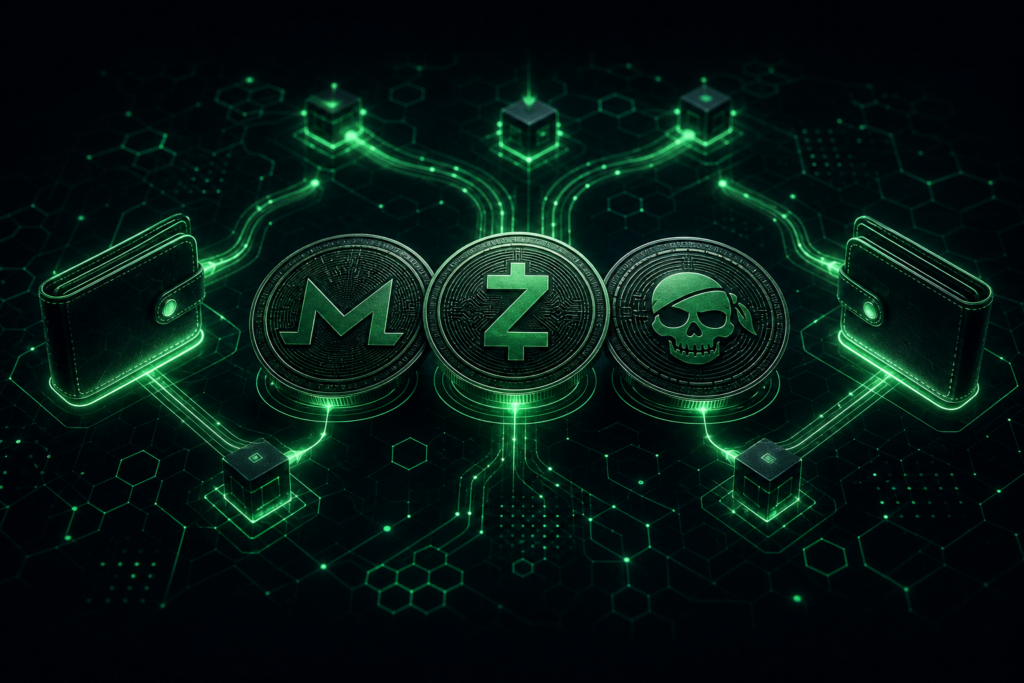
A vendor I know switched to Zcash shielded last year because he thought the cryptography was “stronger” than Monero. Within three months, blockchain analysts traced 40% of his payouts back to a single exchange deposit. The problem wasn’t the math – it was that most of his buyers paid him with transparent ZEC, and the few who used shielded pools still withdrew to transparent addresses that leaked metadata. He went back to Monero and never looked at the other options again.
What We’re Setting Up and Why It Matters
Choosing the wrong privacy coin can undo months of careful operational security. A 2019 study by Foley et al. found that roughly 46% of all Bitcoin transactions involve illegal activity – about $76 billion annually – and the researchers documented a clear substitution effect: as more opaque cryptocurrencies emerge, Bitcoin’s share of illicit volume declines. That shift is happening because people who actually need untraceable payments are migrating to coins that deliver it by default, not by opt-in.
The three coins that matter for anonymous payments today are Monero (XMR), Zcash (ZEC), and Pirate Chain (ARRR). Each takes a fundamentally different approach to on-chain privacy, and the differences aren’t academic – they determine whether your transactions are actually unlinkable or just theoretically so.
Prerequisites – What You Need Before Starting
Before picking a coin, you need a threat model. Ask yourself: who am I hiding from? If the answer is “chain analysis firms,” Monero is the only one of the three that hides transactions by default. If the answer is “a casual observer,” any of them might work, but the failure modes differ.
You’ll also need a wallet that matches the coin. For Monero, the official GUI/CLI wallets (v0.18.x as of late 2025) or Feather (a lightweight Tails-compatible wallet) are the standard. For Zcash, the official ECC wallet supports shielded addresses but the UX is rougher. For Pirate Chain, the Komodo ecosystem wallet is the only realistic option, and the network is small enough that liquidity can be a problem on some exchanges.
Monero (XMR) – The Default Choice
Monero uses three technologies in combination: RingCT hides the transaction amount, stealth addresses generate a one-time destination for every payment so the recipient’s real address never appears on-chain, and ring signatures mix your output with ten other decoy outputs so an observer can’t tell which signer actually spent the funds. Every transaction is private – there is no “transparent mode” to accidentally expose yourself with.
This mandatory privacy is why Monero is the dominant privacy coin on markets like DarkMatter, Nexus, and Torzon. Vendors don’t have to trust buyers to do the right thing, because the protocol enforces it. The trade-off is that transactions are heavier than Bitcoin (about 2 KB versus 250 bytes for a simple BTC transfer), and the blockchain is larger as a result.
Zcash (ZEC) – Stronger Math, Weaker Defaults
Zcash uses zk-SNARKs, zero-knowledge proofs that are mathematically more powerful than Monero’s ring signatures. In fully shielded mode (the “z” address), Zcash provides arguably better cryptographic privacy than Monero. The problem is that Zcash supports both transparent (t-address) and shielded (z-address) transactions, and historically more than 90% of ZEC transactions have been transparent.
Even when users do shield their coins, the shielded pool is small enough that empirical attacks have demonstrated metadata leakage when funds move between the two address types. If you receive a zcash shielded payment and then withdraw to a transparent address, the timing and amount can be correlated. For anonymous payments to work reliably, every participant in the chain has to use shielded addresses – and that almost never happens in practice.
| Torzon Market |
torzon7aphar3x4l5b77nsylgyw26kntbi4m2wemrjh72aczeh27f6qd.onion
|
| DrugHub |
drughuj7l72ig56pza77eriu7yh6qsao4xb4yasq2qfjusxzuq6rlwqd.onion
|
| DarkMatter |
darkmafmzgnsmow5z3spgludhpwxhwbg77oam433fjx3clzh2yp2oaid.onion
|
| Omega Market |
omega7yhz7n4vg4yhf2na2qaaaeatdlqvjbj2juc245mr5muxtnuvgyd.onion
|
| BlackOps |
blackoogcnxogvymmebfwfjhx4k7efpgeoeytxtsev2lc4pqlbz54qad.onion
|
Pirate Chain (ARRR) – Compulsory Shielding, Small Network
Pirate Chain forked from Komodo in 2018 and made a single design decision differently from Zcash: every transaction is forced into the shielded pool. There are no transparent addresses, so users can’t accidentally leak themselves. The cryptography is the same zk-SNARK system Zcash uses, but the default behavior is what makes ARRR interesting.
The downsides are real. The network is small, daily transaction volume is orders of magnitude below Monero, and liquidity on exchanges is thin. Most darknet markets don’t list ARRR as a payment option. For users who want Zcash-level cryptography with Zcash’s opt-in problem removed, it’s a niche but legitimate choice – just don’t expect vendor adoption.
Scam Comparison
| Scam Type | How It Works | Red Flags | How to Avoid |
|---|---|---|---|
| Fake “privacy” wallet apps | Cloned wallet UI that sends your seed phrase to the attacker | App not on official GitHub releases; asks for seed on first launch | Download only from getmonero.org, z.cash, or pirate.black official repos |
| Transparent ZEC phishing | Fake “shield your coins” web tools that request your private key | Web-based “shielding service” requiring t-address spending key | Never enter spending keys online; use official ECC desktop wallet |
| Exchange delisting traps | Coin gets delisted; fake “withdrawal support” site collects credentials | Support contact via DM; “verify wallet” links in email | Withdraw to self-custody wallet before any delisting announcement |
| ARRR liquidity scams | P2P traders offer rates 15% above market, then reverse the trade | No escrow; pressure to release funds early | Use only atomic-swap or escrow services; never release before confirmation |
Verification Steps
For Monero, verify your wallet is using a remote node over Tor (Settings → Network → “Use custom node” with a .onion address). Check that your view key matches what the block explorer shows – if it doesn’t, your wallet is looking at a fake chain. For Zcash, confirm the wallet shows a “z” address starting with “z” and never send to a transparent “t” address if you want privacy. For Pirate Chain, verify the Komodo wallet’s block height matches pirate.black explorer before trusting any balance.
Common Issues and Troubleshooting
If your Monero transactions are stuck “pending,” your wallet is probably syncing to a hostile node. Switch to a trusted .onion node and rescan. If a Zcash shielded transaction doesn’t confirm after an hour, the wallet may have fallen out of sync – close it, restart, and check the latest block. Pirate Chain users occasionally report “missing balance” after restoring from seed; this is usually a rescanning issue, not a theft – let the wallet finish syncing before panicking.
Additional Security Recommendations
Run your wallet on Tails or Whonix, never on your daily-driver OS. Pair the wallet with Tor so your IP never leaks to a remote node. Generate a fresh wallet for every market account – don’t reuse addresses across vendors. And remember the lesson from the vendor at the top: stronger cryptography in a whitepaper doesn’t matter if the default behavior leaks your metadata. For anonymous payments today, mandatory privacy beats optional privacy every time.